
Is AI in Supply Chain Dead? Not Without Human Judgement
By Lewis Reis, Chief Information Officer
I spend a lot of time talking to people about AI in supply chain. Some are excited by it. Some are wary of it. Most are somewhere in the middle, trying to work out what is genuinely useful and what is just noise.
AI can do some impressive things. With enough data, it can process information at a scale and speed most teams cannot match. It can surface patterns, support analysis and help people test scenarios far faster than we could even a few years ago.
Where things become difficult is when organisations start with the tool rather than the understanding behind it.
AI on its own is not a strategy. It does not understand how a supply chain behaves when pressure hits, and it cannot replace the judgement that comes from years of operational experience.
In practice, AI only becomes valuable when experienced people shape how it is used. Without that guidance, it risks becoming little more than a vacuum cleaner for data, collecting information without really understanding what matters.
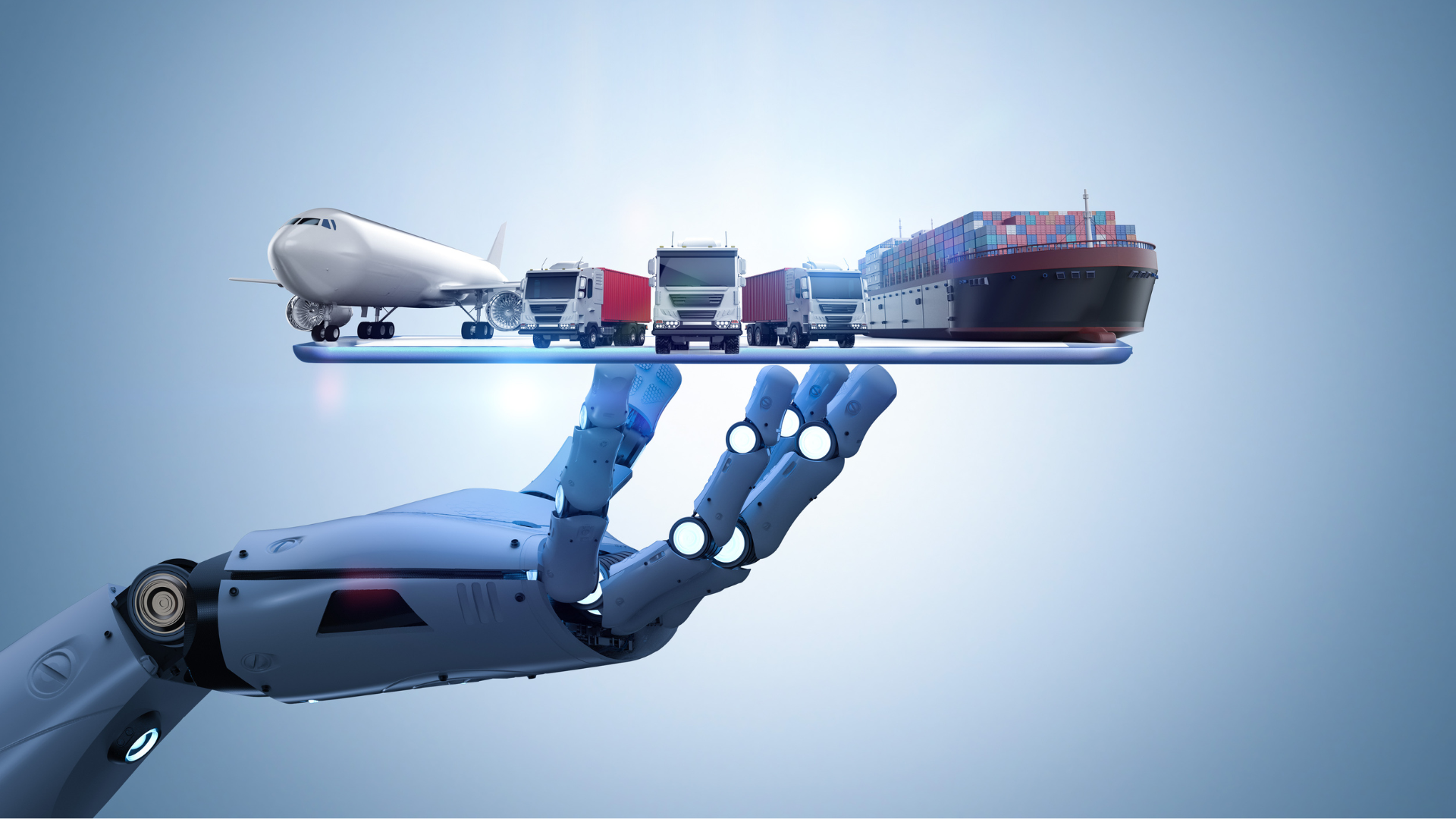
At Visku, we see AI as a support tool. Powerful, yes, but still a tool. Its value sits alongside human expertise, helping people see more clearly and move faster, not replacing the judgement at the centre of supply chain decisions.
Start With the Decision, Not the Technology
One of the biggest mistakes I see is organisations starting with the tool rather than the question.
AI appears on a board agenda, someone mentions it in a strategy discussion, and suddenly the focus shifts to how quickly the business can introduce it. The pressure becomes demonstrating digital change rather than stepping back to ask what problem actually needs solving.
In reality, the more important questions come first.
- What decision are we trying to improve?
- What data would actually help us understand it?
- Can we trust the data we already have?
Because in supply chain, the first problem you see is not always the real one.
A warehouse productivity issue might actually sit upstream in planning. A labour challenge might turn out to be an inbound flow issue. Sometimes the real problem is poor data quality or a process that no longer reflects how the operation actually runs.
If you start analysing the wrong problem, technology will not fix that.
AI will still produce an answer if you point it in the wrong direction. The difficulty is that it can make the wrong diagnosis look convincing.
AI in Supply Chain Is Only as Good as Its Data
Most supply chain environments do not start from a clean slate.
Data sits in different systems, formats and levels of quality. Some of it lives in warehouse management systems. Some in HR or finance platforms. Some in spreadsheets someone built years ago that nobody fully trusts, but everyone still uses.
That is normal.
Matt Berryman touched on something similar in a recent piece on accessible supply chain data. The problem is rarely a lack of information. The data is scattered across systems and spreadsheets, which means teams spend more time stitching numbers together than acting on them.
If you apply AI on top of fragmented or poorly understood data, you only increase uncertainty. You may get answers faster, but that does not mean they are better, just confident conclusions based on flawed inputs. Data quality is essential to build strong AI foundations.
Where Puddle Supports Supply Chain Decisions
This is where Puddle comes in.
Puddle is a data management and decision-support environment developed at Visku. It was designed specifically to deal with one of the most common challenges in supply chain transformation: fragmented operational data spread across systems, spreadsheets and teams.
Its role is simple.
Bring supply chain data together, structure it properly, and make it usable.
In practice, that means connecting data sources, organising messy inputs and creating a clearer operational picture before deeper analysis begins.
Puddle is not there to give leaders the answer.
It exists to give teams a stronger foundation so they can explore scenarios, challenge assumptions and reach better decisions.
Because in supply chain, the challenge is rarely about having one perfect dataset. It is about bringing enough clarity to multiple sources of information so that better questions can be asked and better decisions can follow.
Puddle supports that process. It does not replace it.
AI Should Amplify Expertise in Supply Chain
The simplest way I describe AI is as an amplifier.
It can increase visibility. Speed up analysis. Help teams test scenarios and compare options.
But it still needs experienced people to lead.
That becomes particularly important in complex supply chains, where there is rarely one obvious answer and almost always a trade-off to make. Leaders may be balancing service against cost, resilience against efficiency, labour constraints against customer expectations, or inventory against working capital.
Models can help explore the options. They cannot carry the weight of the decision on their own.
This is why organisations need an environment where human expertise leads, and AI supports. Strong data foundations bring information together from across the operation, and then tools such as digital twins, modelling or analytics can sit on top of that.
Puddle sits within that support layer, helping bring fragmented supply chain data into a single working environment where teams can see across systems rather than jumping between them.
That clarity makes it easier to explore scenarios, challenge assumptions and support decisions with evidence.
People in Suppy Chain Still Make the Difference
Can AI anticipate disruption? To a point, yes. It can flag patterns, process updates and highlight changes in the data. But resilience in supply chain still depends heavily on people.
Leaders need to understand risk, maintain relationships across suppliers and partners, and recognise when a signal in the data genuinely matters rather than being noise.
The reality is that supply chains operate in environments shaped by constant disruption. War, politics, environmental events, labour shortages and network constraints all create volatility that does not fit neatly into a model.
Systems can show the impact and even simulate possible responses. But someone still has to decide what is practical, what is acceptable and what happens next.
Use AI to Strengthen Human Decisions
If you are looking seriously at AI in supply chain, start with the decisions you want to improve, not the technology itself.
Look at where teams struggle to see clearly today. Where decisions slow down because data is disconnected or assumptions have never been tested.
This is where experienced supply chain consultants can add real value, helping organisations untangle complexity and understand what is really happening inside the operation.
Used well, AI should free people to focus on the work that actually moves the business forward.
Less time chasing spreadsheets.
Less time reconciling conflicting reports.
More time interpreting the data, challenging assumptions and making better decisions.
That is the role I see for Puddle.
Not replacing human experience, but strengthening it.